Hold onto your voter registration cards, folks, because this one is absolutely wild.
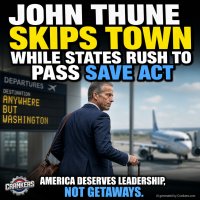
Senate Majority Leader John Thune just packed his bags and sent the entire chamber on a month-long vacation, and he did it with barely 90 days remaining before what promises to be a scorching hot midterm election season. The kicker? He bounced without pushing through President Trump's top election integrity priority, the SAVE America Act, as Conservative Brief reported. That stands for the Safeguard American Voter Eligibility Act, and it would force people to show documentary proof of citizenship when signing up to vote in federal elections plus present photo ID at the ballot box.
The last thing Thune managed to accomplish before heading for the exits? Confirming Todd Blanche as the nation's 88th attorney general. Cool. Great. But what about that whole election security thing?
Here is where it gets really juicy. While Thune apparently could not wrangle enough Republican senators to get this legislation across the finish line, GOP governors around the country basically said, "Fine, we will handle it ourselves." And they are doing exactly that.
Seven states recently adopted both proof of citizenship and voter ID mandates. Five additional states already had similar citizenship documentation laws on the books before this wave. The federal bill has cleared the House multiple times but keeps hitting a brick wall in the Senate.
Thune's own home state of South Dakota got in on the action when Governor Larry Rhoden signed Senate Bill 175 back in March. That law demands citizenship documentation during voter registration, accepting everything from passports to birth certificates to tribal ID cards.
Kansas went absolutely nuclear with their own SAVE Kansas Act in 2026. Democratic Governor Laura Kelly tried to kill it with a veto, but the Republican legislature steamrolled right over her objections. That law cross-references voter rolls with a federal database designed to flag ineligible individuals.
Florida's Ron DeSantis signed his version in April, set to kick in during 2027. Mississippi followed suit with something called the SHIELD Act, which took effect on July 1, 2026. Both measures require officials to verify citizenship through state motor vehicle records and federal databases.
Utah, Ohio, and Wyoming have also jumped aboard this train, according to the Daily Signal.
Now here is the painful reality check. A 2013 Supreme Court ruling makes all of this complicated at the federal level. The court determined that the National Voter Registration Act, better known as the Motor Voter Act, restricts states from demanding documentary citizenship proof when applicants use the federal registration form.
Even if Thune somehow pulls a miracle and passes the federal version after recess, there would literally not be enough time for states to implement those requirements before voters hit the polls. So basically, the states that already took matters into their own hands are the only ones sitting pretty right now.
Politics at its absolute finest, people.
Like what you see? Then sign up for our Free Newsletter