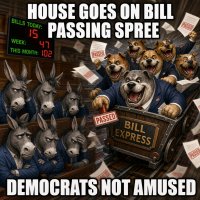
The U.S. House of Representatives had itself quite the productive Wednesday, cranking out legislation like a factory that runs on partisan energy drinks. First up, lawmakers voted 231 to 186 to approve the Deporting Fraudsters Act, a bill that would make welfare fraud by noncitizens an explicitly deportable offense, as Conservative Brief reported. The measure was introduced by Rep. David Taylor, an Ohio Republican, and would update the Immigration and Nationality Act accordingly. Naturally, 186 Democrats gave it a hard no.
Rep. Tom McClintock of California summed up the GOP position with all the subtlety of a boarding announcement: if you admit to or get convicted of scamming public benefits, you are getting on the next flight out and your return ticket is permanently cancelled. Democrats, meanwhile, raised concerns about due process, pointing out that the bill could theoretically boot someone from the country before they ever see the inside of a courtroom. Which, regardless of where you stand politically, does seem like skipping a few chapters in the American justice system handbook.
But wait, there's more! Because why pass one controversial bill when you can smoosh two together like a legislative turducken? The House also voted 231 to 198 to approve a combo package that bans members of Congress and their families from buying individual stocks AND creates new federal voter ID requirements. Every Republican except a small handful said yes, while only 13 Democrats crossed the aisle to join them.
Rep. Zach Nunn of Iowa, one of the bill's biggest cheerleaders, argued that combining these two issues was basically giving Americans a two for one deal. He even dropped this gem aimed at his colleagues across the aisle: "Only in Washington can you have two wins for 90 percent of Americans, and Democrats will say that is one win too many." Say what you will, but the man knows how to craft a soundbite.
Rep. Stephanie Bice of Oklahoma defended the stock trading provisions by saying Americans deserve confidence that their representatives are not just insider trading their way through public service. The ban would cover future stock purchases but would not force lawmakers to immediately dump their current portfolios. They would just need to follow disclosure rules before selling. Blind trusts would still be allowed, because apparently we trust people who cannot see their own money.
The voter ID section would require government issued identification for voting, including certain mail in procedures. Democrats objected on multiple fronts. Rep. Joe Morelle of New York said his party supports banning stock trades but complained the bill conveniently forgot to include the president, vice president, and federal judges. Progressive members also griped that existing holdings got a pass.
Even some Republicans were not thrilled with the packaging strategy. Rep. Thomas Massie of Kentucky argued that stapling voter ID requirements onto the stock trading ban basically guaranteed Democrats would never support it. Which, to be fair, is a pretty solid observation from someone watching his own team play 4D chess against bipartisanship.
Like what you see? Then sign up for our Free Newsletter