In a shocking twist that surprises absolutely nobody who has ever dealt with government bureaucracy, the House of Representatives actually passed a bill designed to help disabled Americans get back to work. I know, I know. Politicians doing something practical? Somebody check the temperature in hell.
H.R. 8884, charmingly titled the Removing Barriers to Work for Disabled Americans Act, was sponsored by Rep. Austin Scott, a Republican from Georgia, and it cleared the chamber with a 232 to 188 vote. The legislation now heads over to the Senate, where it landed in the Finance Committee, also known as the place where bills go to take a very long nap.
So what does this thing actually do? It gives the Social Security Administration permission to run test projects under the disability insurance program through the end of 2030, with those projects allowed to continue until 2031. This authority previously expired back in 2022, meaning the government has been sitting around for years without the ability to even experiment with making things better. Classic.
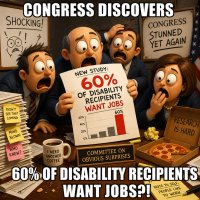
Here is the stat that really makes your eyebrows hit the ceiling. Ways and Means Committee Chairman Jason Smith from Missouri pointed out that more than 60 percent of people collecting disability insurance have said they want to rejoin the workforce. But fewer than one percent actually manage to leave the program through successful employment each year. Let that marinate for a second. The system is so tangled up in confusing rules, benefit cliffs, and overpayment nightmares that virtually nobody can navigate their way out, even when they desperately want to.
Smith called the gap between wanting to work and actually being able to under current regulations "gigantic," which feels like an understatement roughly the size of Montana. People are literally afraid to try earning money because the system might yank their benefits or bury them in paperwork.
The bill requires that every participant joins voluntarily and that nobody sees their total income go down. So this is not some sneaky scheme to boot people off assistance. It is basically the government saying, "Hey, maybe we should figure out what actually works before we carve anything into stone." Revolutionary thinking, truly.
The legislation also expands coverage to include blind Americans, broadening who can benefit from these pilot programs. It picked up bipartisan support in committee and even grabbed some Democratic votes on the floor, proving that occasionally, just occasionally, both sides can agree that a broken system needs fixing.
Now the Senate gets its turn, and supporters are hoping they move quickly. Whether that hope is justified given the Senate's legendary pace of doing anything remains to be seen. If everything goes smoothly, the SSA would regain flexibility to design and evaluate new approaches with full transparency requirements baked in. The whole concept boils down to one simple idea: disability does not automatically mean inability, and maybe the government should stop acting like it does.
Like what you see? Then sign up for our Free Newsletter